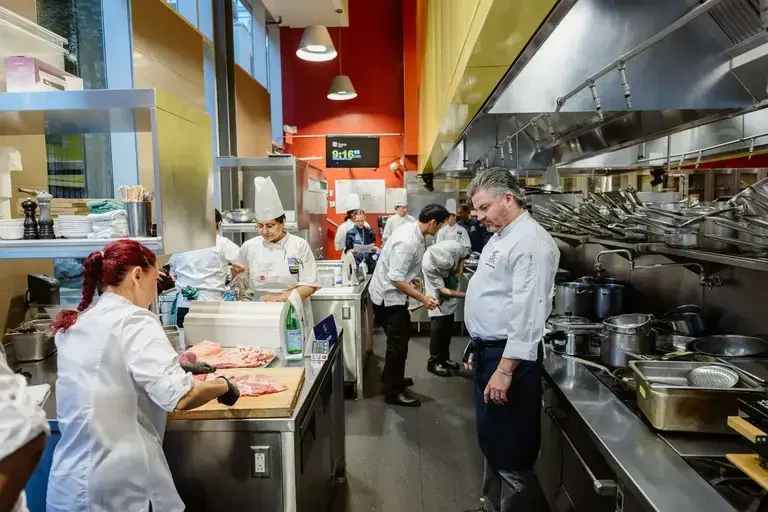
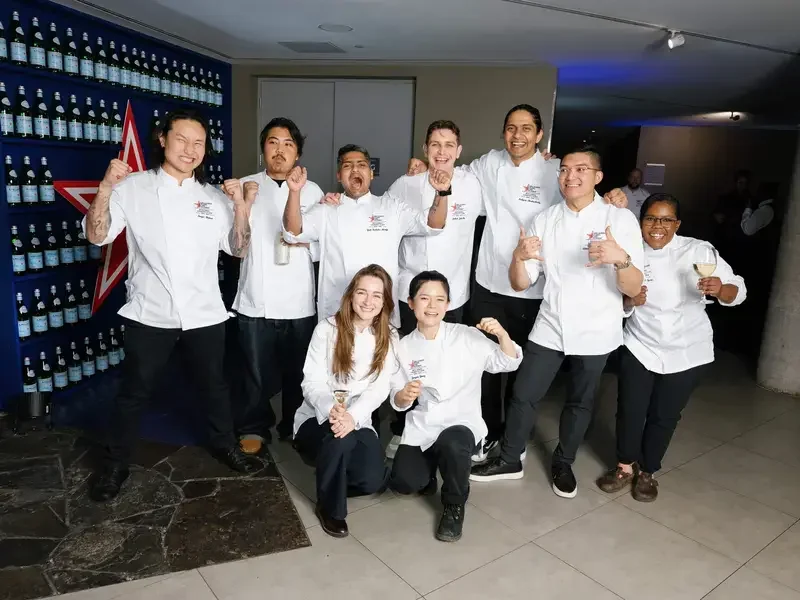
Energy ran high at Toronto's George Brown Polytechnic Chef School on the St. James Campus as 10 chef contestants, their mentors and student volunteers darted between kitchen stations during the S.Pellegrino Young Chef Academy Competition 2026-27 Canada Regional Final. Held in late October, the prestigious biennial event gave rising chefs a platform to present signature dishes showcasing their technical skills, creativity, culinary philosophies and lived experiences.
Months of preparation culminated in a few high-pressure hours of focus, nerves and excitement, with competitors emerging one by one to present their creations to the Local Jury of chefs Daniel Hadida, Briana Kim and Quinton Bennett. From tableside saucing to a scented-towel handwashing ritual before tasting, the chefs guided jurors through dishes rooted in heritage, formative food memories and heartstring-tugging stories, all while demonstrating technical precision and a commitment to zero-waste cooking.
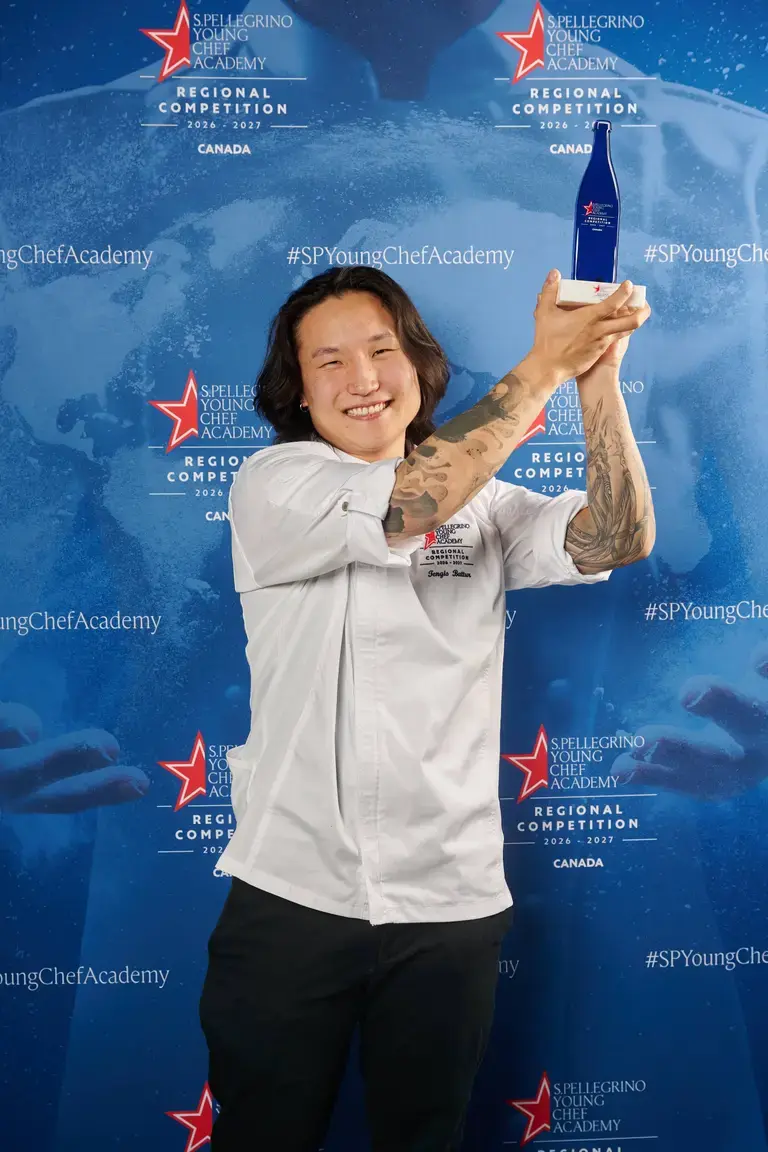
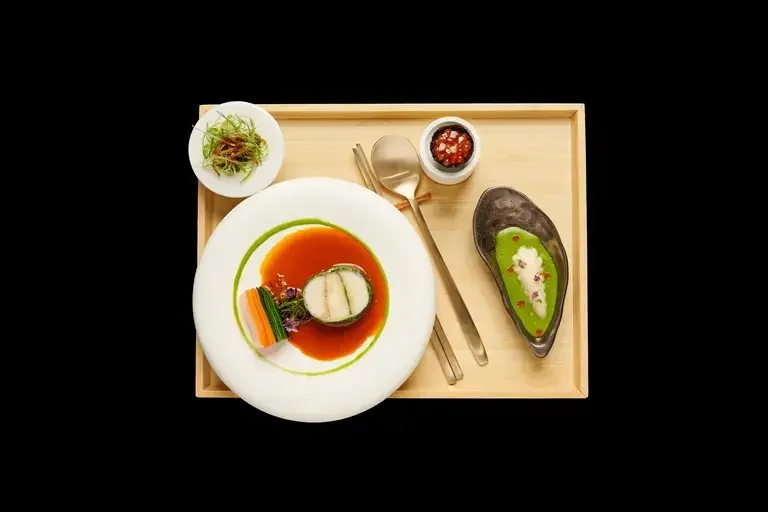
The following day, Tengis Battur of Vancouver's Five Sails by Alex Kim was revealed as the winner for his signature dish, ‘Steppe’ in the Spring, to thunderous applause during an awards ceremony at Hotel X Toronto. Battur will join 14 other regional winners at the Grand Finale in Milan in 2027 to compete for the title of the world's best young chef.
Briana Kim praised the technical skill, execution and individuality displayed across the competition, but said Battur's entry distinguished itself. “Tengis brought a distinctive perspective to his dish, expressing his Mongolian heritage and its nomadic culture through a Canadian lens."
For Hadida, the sense of cultural pride and authenticity displayed throughout the competition left the strongest impression. "The young cooks competing to represent Canada on the global stage showed the diversity and openness of this country in every dish. Their skill and maturity went well beyond what I expected, and it left me optimistic about where the next generation of Canadian cooking is heading."
The collateral awards brought a double victory for Jungun ‘Lizzy’ Yang of Vancouver's Boulevard for her dish Tides Between Two Shores—A Haenyeo Story: From Busan to Vancouver, inspired by her experiences in the two coastal cities. Yang received both the Fine Dining Lovers Award, which recognizes the dish that most effectively conveys a chef's personal beliefs, and the Acqua Panna Connection in Gastronomy Award, chosen by the mentors for the dish that best connects culinary heritage with a personal, contemporary perspective.
"Receiving these two awards means so much to me," said Yang. "I feel incredibly honoured and grateful, and they've given me the confidence that I'm on the right path as a chef.”
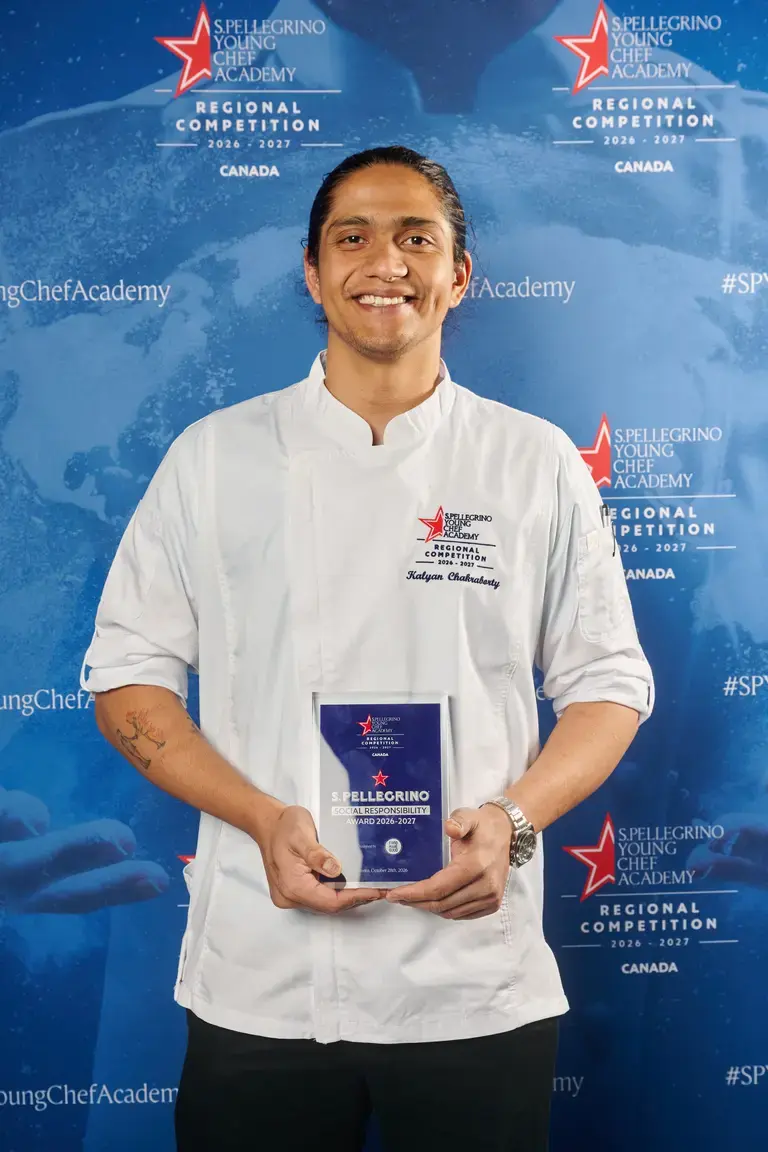
The S.Pellegrino Social Responsibility Award went to Kalyan Chakraborty, Chef de Cuisine at Richmond Station in Toronto, for Ontario Rabbit and Everything It Ate for Dinner. The dish embodied several of the award's sustainability principles, particularly resource use, waste reduction and advocacy. By starting with whole rabbits and using every cut to its fullest potential, Chakraborty demonstrated a nose-to-tail approach that highlighted respect for ingredients, local sourcing (including the vegetables) and creative cooking with minimal waste.
The competition was more than polished plates and composure under pressure, however; it offered a preview of the ideas, techniques and perspectives that could shape the future of dining. These are the trends that caught Fine Dining Lovers' eye.