Sorry, you need to enable JavaScript to visit this website.

The native ingredients enchanting chefs in 2026

From Pacific spot prawns to sea buckthorn and Arctic char, here are six ingredients we keep spotting on menus across the country
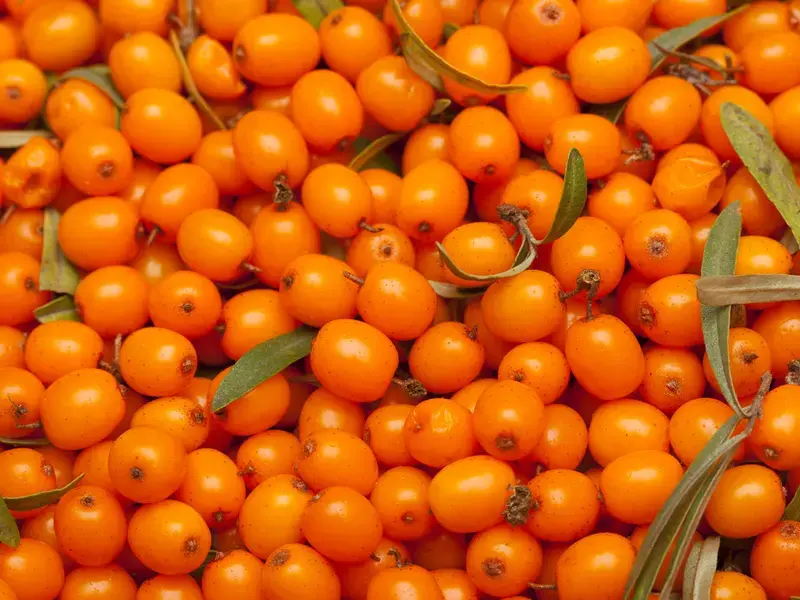
Orange sea buckthorn berries.

Sea buckthorn. All photos: iStock

Maple has moved far beyond pancakes

Yes, maple syrup still matters, but Canadian chefs are using it in far more interesting ways than simple sweetness. Across the country, maple is increasingly treated less like a gimmick and more like a seasoning – earthy, subtle and surprisingly versatile. 

At Chez Boulay in Quebec City, maple appears in refined boreal dishes inspired by the province’s landscapes, while Honō Izakaya, also in Quebec City, uses it both in its famous miso-maple crème brûlée and in Japanese-influenced cocktails.  

Atlantic oysters are a national luxury product 

PEI and Nova Scotia oysters have become globally recognised luxury ingredients, prized for their clean flavour and cold-water freshness.  

At restaurants like The Bicycle Thief in Halifax and Joe Beef in Montreal, oysters continue to anchor seafood-focused menus, appearing both in classic raw preparations and, increasingly, in richer cooked dishes. 

Saskatoon berries are having a moment 

With a flavour somewhere between blueberry and almond, which works especially well in desserts and preserves, Saskatoon berries are now appearing not just in home baking but increasingly in polished restaurant settings too. 

At The Berry Barn in Saskatoon itself, they are the star of the restaurant’s famous pies and cheesecakes, while in Winnipeg's Fusion Grill they can be found in a compound butter accompanying grass-fed Prairie beef. 

Arctic char is the new salmon 

For chefs looking beyond salmon, Arctic char has emerged as a favourite alternative. Delicate, rich and well suited to Canada’s colder waters, it is increasingly appearing on seafood-focused menus across the country, for example at Edulis in Toronto or at two-Michelin-starred Tanière³ in Quebec City. 

If the current popularity of these ingredients tells us anything, it might be that Canadian cuisine itself is enjoying a moment of growing self-confidence. Chefs seem increasingly comfortable building menus around ingredients that genuinely reflect where they are – cold-climate produce, regional seafood and flavours shaped by landscape and season – making Canada one of the world's most interesting places to eat right now. 

Spread the flavour—share this story

Join the community
Badge
Join us for unlimited access to the very best of Fine Dining Lovers
Unlock all our articles
Badge
Register now to continue reading and access all our exclusive stories.

Already a member? LOG IN